English translation by Hugo Parker. French original. The original is scheduled for publication.
Spectacular architecture, wonderful exhibitions and inviting terraces… Looking at a brochure, you can already picture the evening.
Then you visit. Wearing your event manager’s hat, you inevitably look beyond the setting: where will guests gather? Where will the caterer prepare the service? What happens between the last slide and the first drink?
In January 2026, I visited the Fondation Louis Vuitton in Paris to explore the possibility of holding an event there. The architecture appealed to me as much as the exhibitions.
My idea was to bring together 100 to 200 people for a presentation followed by a cocktail reception. On paper, it sounded promising. On site, I found it much harder to picture a smooth running order.
A remarkable address, but which space for my group?
For the format I had in mind, Le Frank restaurant emerged as the option to consider among those discussed during the visit.
That was where I started to rethink the experience.
I found the space quite compartmentalised and the furniture difficult to rearrange. I wanted guests to move around easily, meet one another and really feel that they were spending the evening at the Fondation. In that configuration, I couldn’t quite see the experience taking shape.
It’s a question I find essential during any site visit: how much of the place named on the invitation will my guests actually experience?
You can book an extraordinary address and end up spending most of the evening in a space that reveals very little of it.
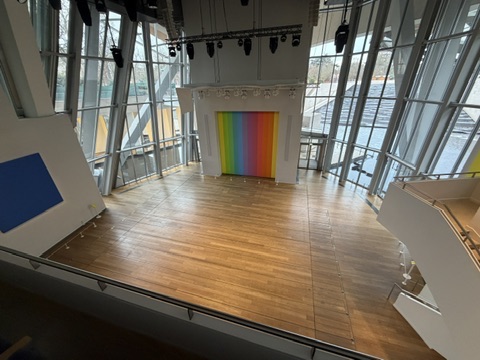
In the auditorium, I was thinking about what came after the conference
The auditorium offered other possibilities, although its scale already felt generous for the group I was considering.
Above all, I was thinking about the transition from conference to drinks. Holding both in the same space raises a very practical question: how do you prepare the service while someone is speaking?
You can organise a great deal in advance. But there is almost always some final preparation just before a reception: staff moving around, equipment being adjusted and last-minute arrangements. All of it can make noise.
Then there are the chairs.
Either they stay behind the guests during drinks, or a team removes them. In the first case, the setting doesn’t match the atmosphere I want. In the second, guests watch the room being changed around.
I want people to move naturally from one part of the evening to the next. I’d rather they didn’t feel as though they were standing in the middle of a dismantling operation.
A floor plan shows a layout. It rarely shows the twenty minutes needed to move to the next one. Yet those are precisely the twenty minutes worth examining before booking.
The terraces: from the photograph to the actual view
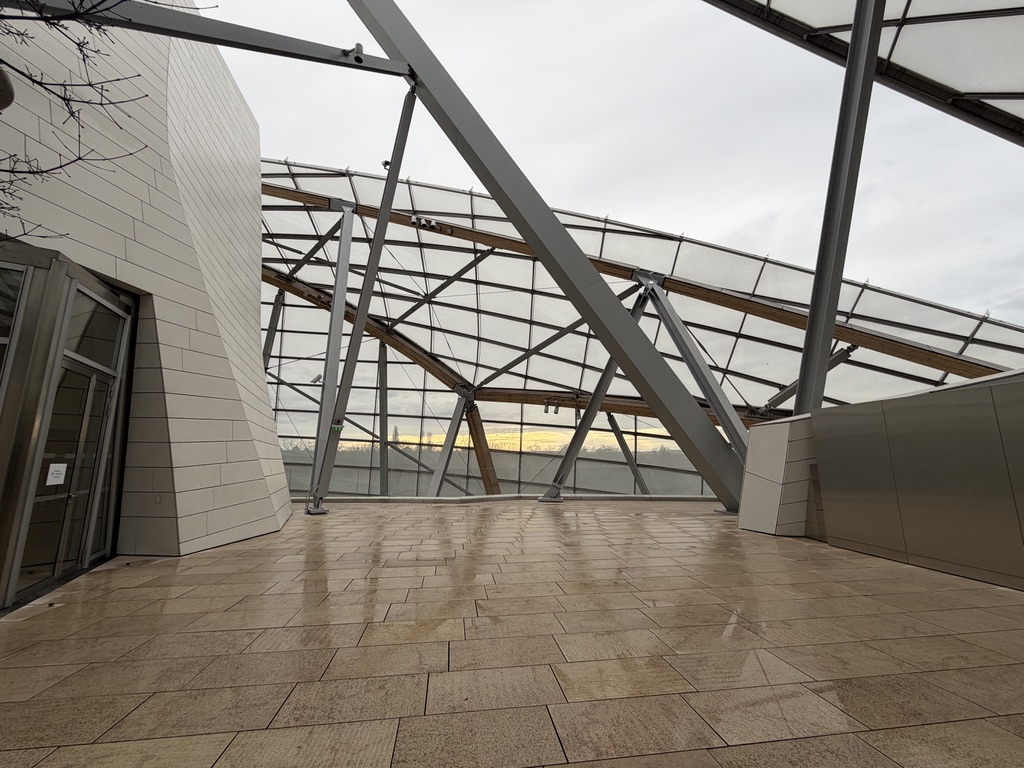
The terraces were among the spaces I was most looking forward to seeing. The photos show beautiful views, and the architecture is naturally a big part of the experience.
On site, that architectural presence was exactly what changed my impression. The structures take up a large part of the view. Depending on where you stand, they interrupt perspectives I had imagined to be more open.
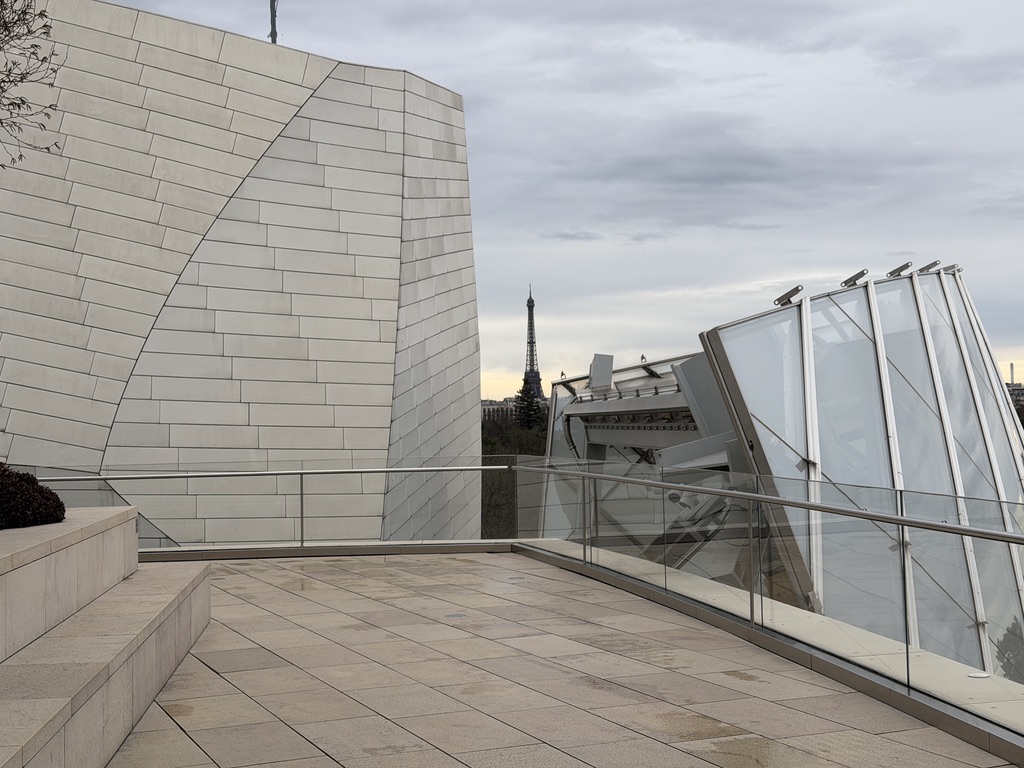
The spaces also felt large for my intended format. Having room is pleasant, but you need to be able to create an atmosphere and encourage people to gather.
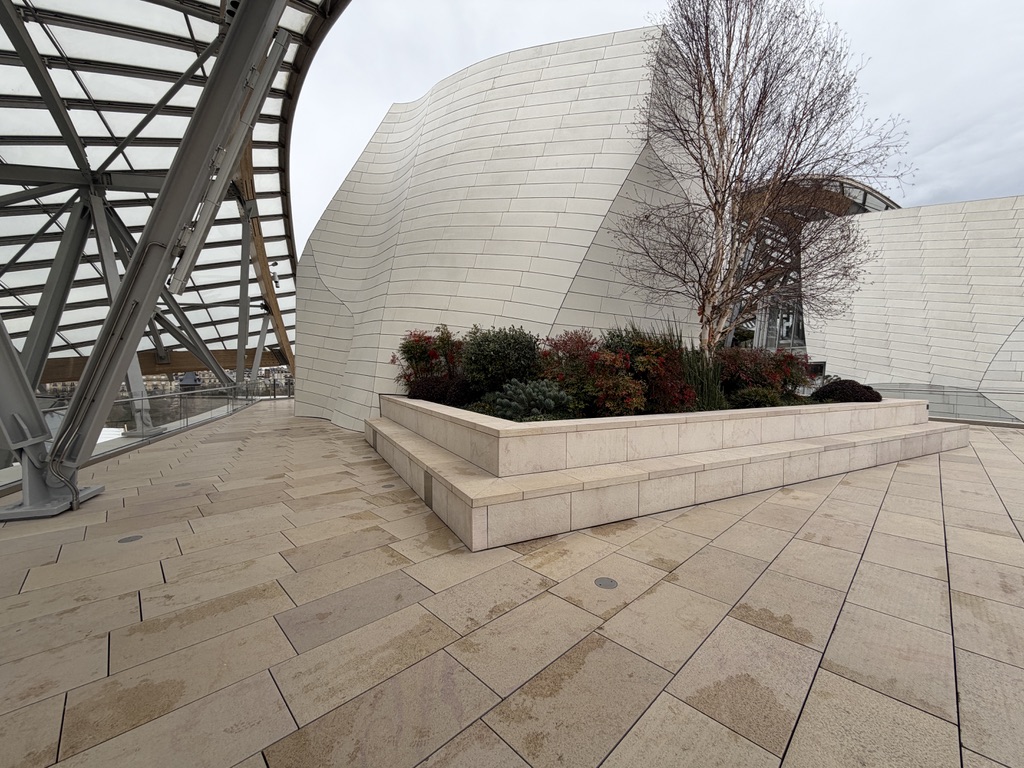
During this winter visit, a few details were less convincing: marks in the corners that I perceived as damp, and an impression that some areas looked less fresh than in the presentation images.
That remains my impression at a particular moment, in January 2026. But it’s also the value of going there: looking at finishes, corners, circulation routes and the view from the exact spot where guests will be holding their drinks.
The event begins before the entrance
Another thing that struck me was the arrival.
Along the route I took, the surroundings and construction work gave a less appealing first impression than I had expected of the venue.
For a daytime cultural visit, you can easily overlook that. For an evening with invited guests, it matters: how will they arrive? Where will vehicles drop them off? Which route will they follow? How will they leave?
The address alone doesn’t answer those questions. Walk the route, ideally in conditions close to those your guests will experience.
A place I enjoyed visiting, but which didn’t fit my intended event
I have very good memories of the Fondation Louis Vuitton as a cultural destination. The architecture and exhibitions are excellent reasons to visit.
For the event I had in mind, however, the layouts discussed didn’t offer the flexibility I needed. That doesn’t mean you can’t hold beautiful events there. It means finding the format that works with these particular spaces.
Perhaps the most useful question to keep in mind during a visit is: does this venue serve my event, or am I reshaping the entire event just so I can use this venue?
Before committing, I’d recommend arriving with a detailed running order and walking through it on site:
- Guests’ arrival and their first meeting point.
- The presentation, including any preparations happening at the same time.
- The transition from conference to drinks.
- The movement of staff, equipment and guests.
- Departure at the end of the evening.
Beautiful photos make you want to visit. A site inspection tells you whether the evening you’re imagining can actually take shape.
A personal account of a visit in January 2026 for a project involving 100 to 200 guests. These observations concern the layouts considered on that occasion. Private-hire possibilities should be confirmed directly with the venue.
Photos: Hugo Parker, January 2026.
Also read: Choosing the right venue for your event: tips and advice.


Votre commentaire