English translation by Hugo Parker. French original. The original is scheduled for publication.
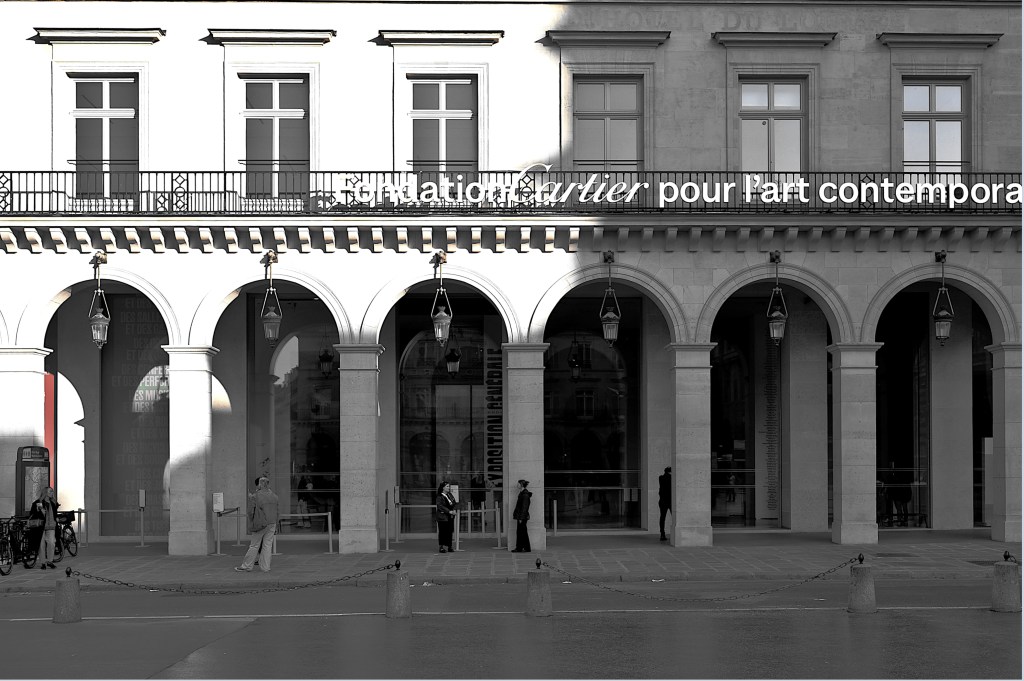
A beautiful building, artworks that make you want to stop at every turn, and a team with whom ideas start flowing from the very first visit. At the Fondation Cartier, it didn’t take me long to imagine an evening taking shape.
After visiting the Fondation Louis Vuitton, I explored this other Paris venue with a clear intention: an event where art would be central to the experience. The building, the works and the encounters would give the evening its meaning.
This time, the thing that made me hesitate was very practical: what time could we start setting up?
A place that immediately sparks ideas
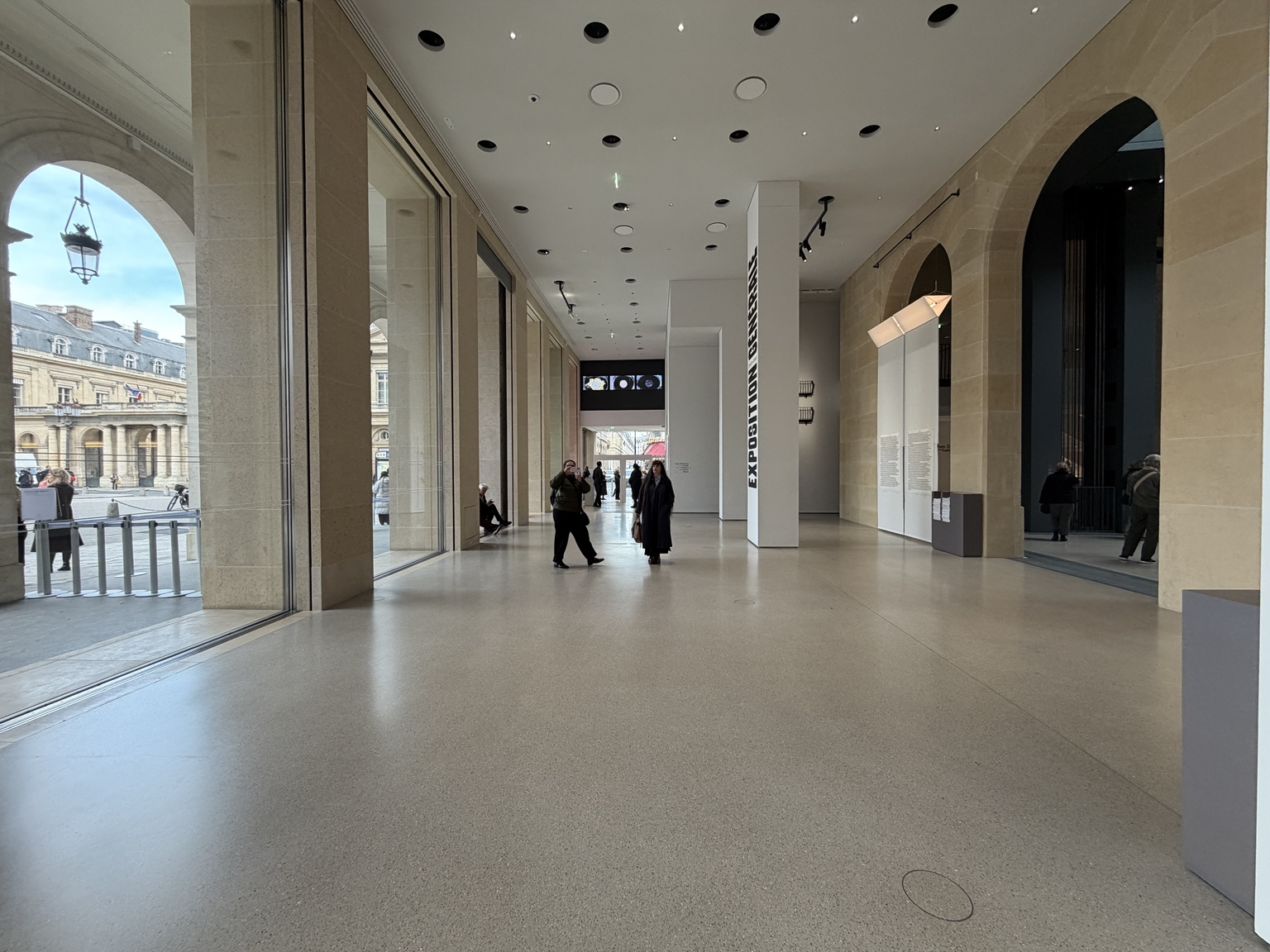
A short walk from the Louvre and the Carrousel du Louvre, the new Fondation Cartier is ideally located for bringing guests together in Paris. Arrival is easy to imagine, the entrance is splendid and, once inside, you immediately understand the appeal of organising something there.
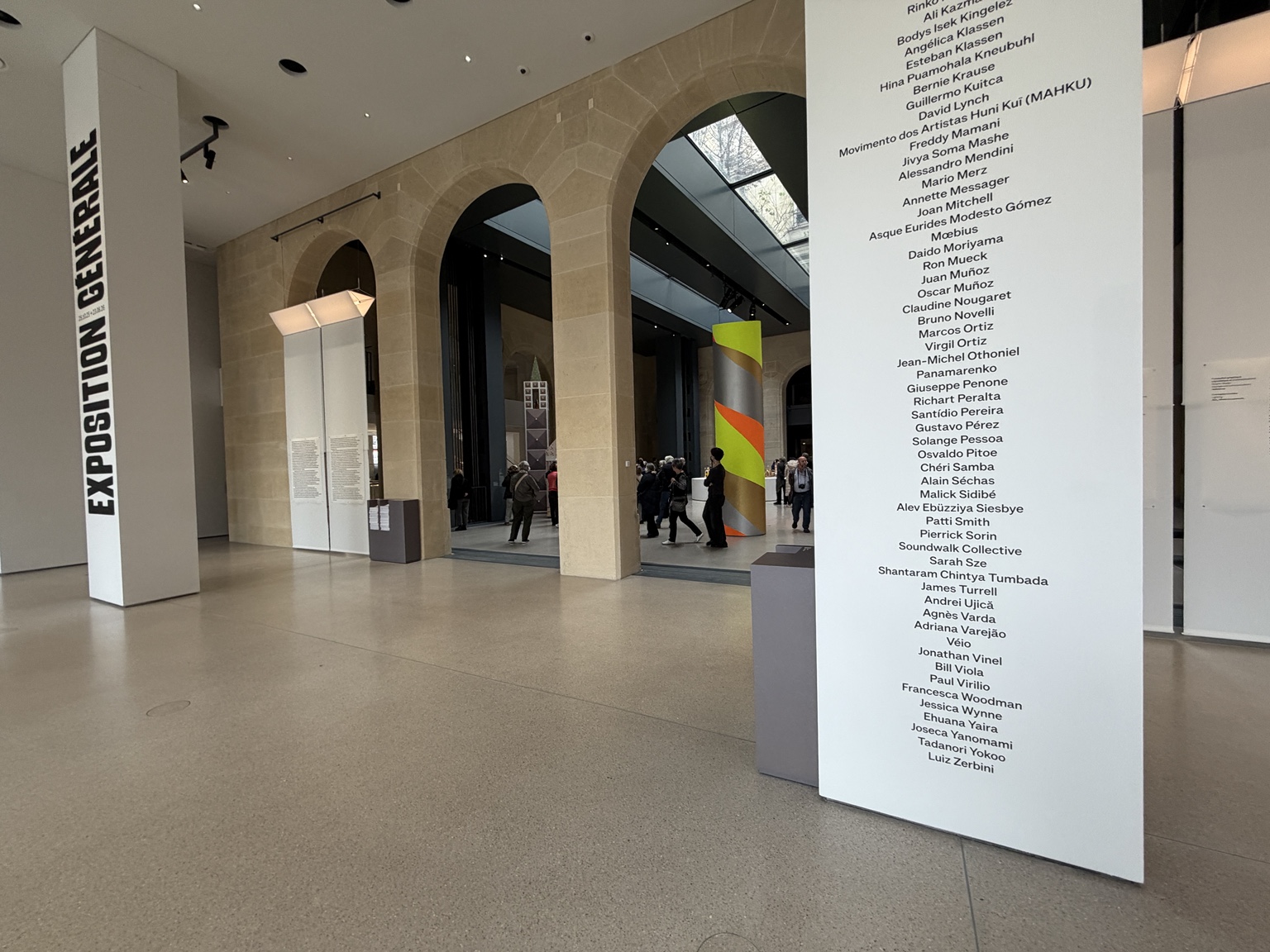
I really enjoyed the works on display and the way they interacted with the building. To my eye, the artistic experience sometimes felt more specialised, but it was thoroughly stimulating.
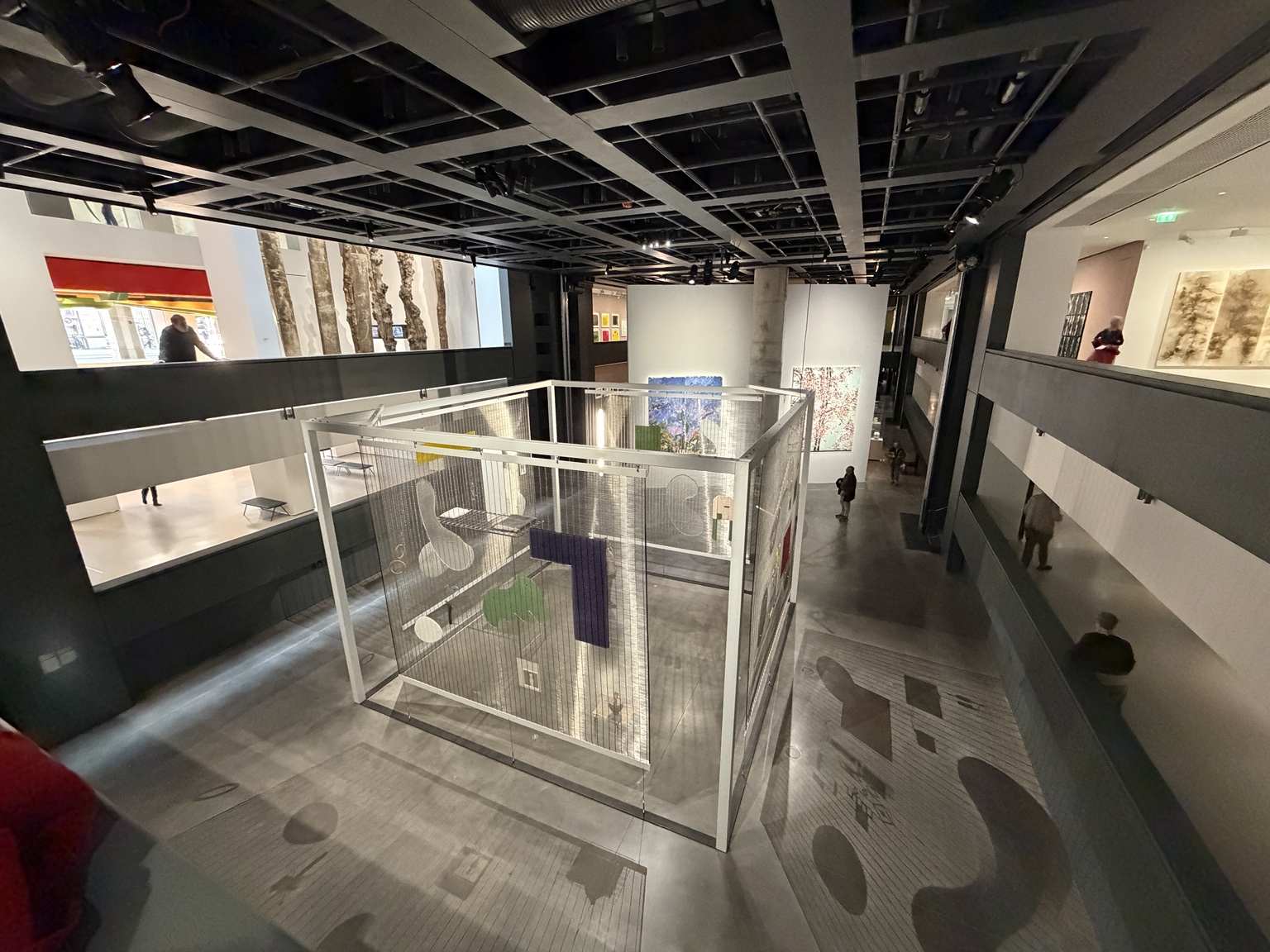
The interior architecture is a big part of that impression. Movable platforms allow the levels and perspectives to change for exhibitions. You look at the artworks, but also at how the space has been built around them. It’s quite exceptional.
That obviously doesn’t mean the floors can simply be reconfigured for a reception. But the architecture gives the visitor journey a character that would be difficult to recreate in a conventional event space.
A team you want to build something with
The welcome made a real difference to my impression. I met someone passionate, who knew the venue and took the time to listen to what I had in mind.
I sensed a real willingness to develop a project that made sense for the Fondation. We could discuss the experience, the content and what guests would actually come to discover.
I began imagining different encounters with art over the course of one evening: a guided visit through the collections, musicians, a performance, perhaps an illustrator, and a screening in the auditorium. These were ideas we discussed openly, rather than an already approved programme.
That conversation made me want to take the project further. In a place with such a strong cultural identity, that openness makes a real difference.
Spaces to connect around the experience
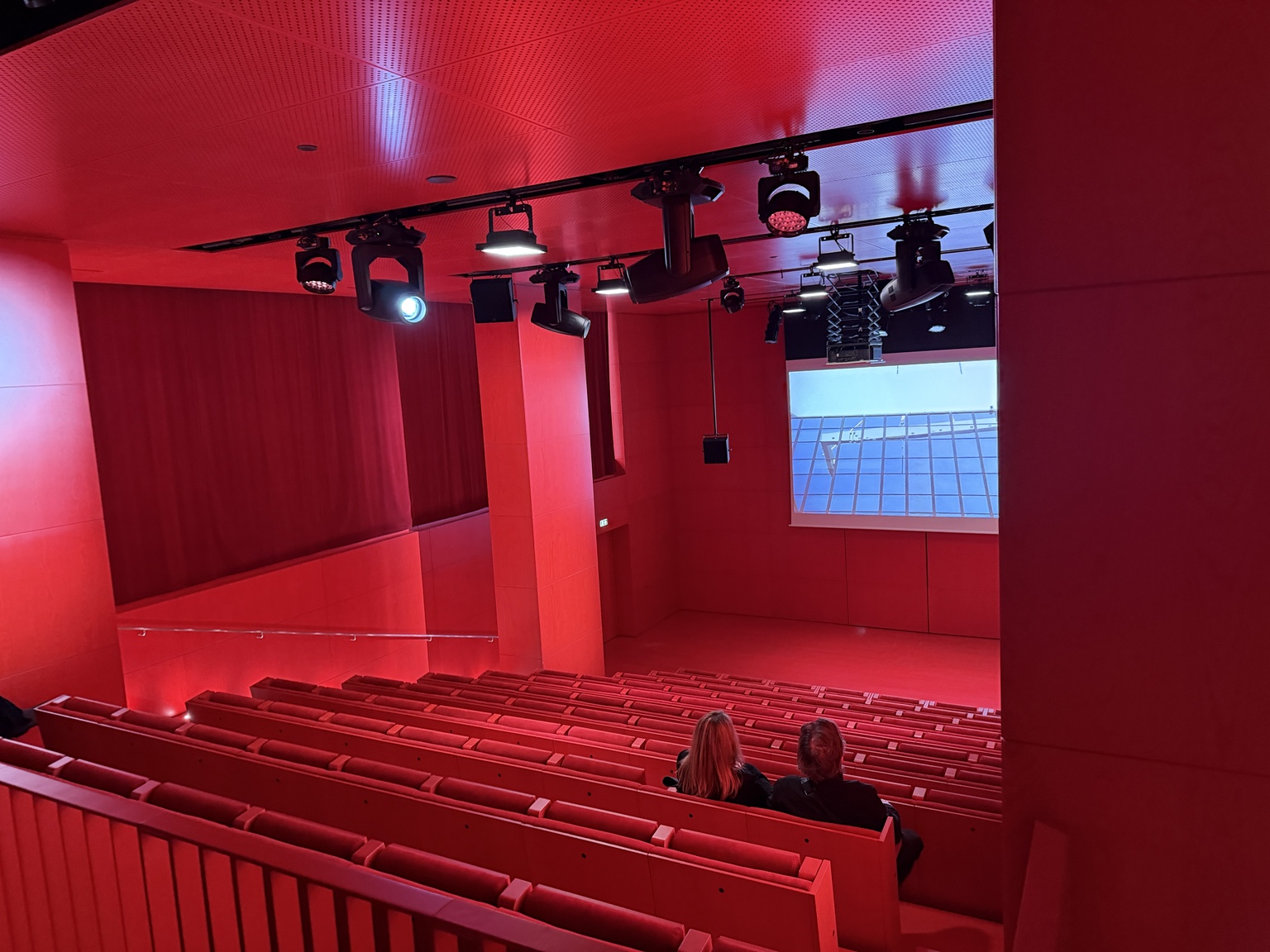
I particularly liked the auditorium. All that red, right down to the seating, gives it a striking presence. With the separate entrance I was shown, I could see it working well for a screening or a short presentation before the visit.
Le Petit Café seemed better suited to a smaller gathering than the larger reception I imagined. The entrance hall offered another possibility: keeping drinks there, then inviting guests to explore the collections without carrying their glasses.
That was the rule explained to me for the proposed project, and I completely understood it. Protecting the artworks needs to be part of the design from the outset.
Drinks in a designated area, a guided discovery elsewhere and artistic interventions at different points: in principle, I found the journey very appealing.
The sticking point: the time before the first guest arrives
During our discussions, the main constraint concerned access to the spaces to prepare the evening after public visiting hours. That was where I struggled to make my running order work.
What time can the caterer enter? When can the furniture, buffets and service be set up? How much time remains for technical checks, the briefing and final touches before guests arrive?
In a venue of this calibre, you want the reception to match the setting. However much you prepare in advance, some of the work has to happen on site.
If technical access starts late, the time you can open the doors to guests follows suit. For an evening with clients or partners, that affects the whole programme: the welcome, the visit, the performances and the time people actually spend together.
An evening’s starting time also depends on when the teams can begin working. No photograph can tell you that.
Since the visit, some possibilities are worth revisiting
While preparing this article, I checked the current private-hire offer again. It now mentions Monday possibilities, when the Fondation is closed to the public, including evening access from 4 pm, as well as other time slots depending on the space.
The Fondation also advertises a reception space within the Ibrahim Mahama exhibition, while the entrance hall is listed as unavailable during that exhibition. The studio is currently described as having 106 seats and four wheelchair spaces.
Those details don’t tell us how much setup time a particular project would receive. They do, however, offer good reasons to reopen the discussion with a precise running order.
My concern therefore relates to the arrangements considered during my visit. I can’t turn it into a general statement that holding a successful evening at the Fondation Cartier is impossible.
Another development since the project I had in mind: Anne-Sophie Pic Paris opened on 18 September 2026. Another reason to be interested in the address, without assuming it can be combined with private hire.
The price didn’t stop me. The schedule did.
The prices discussed were high. That didn’t surprise me for an institution of this kind, with the requirements involved in hosting an event among artworks.
Personally, I think it makes sense for events to be carefully managed and to respect the venue’s cultural purpose. That is part of its appeal.
For my project, the decisive point was having enough time to prepare properly for the experience promised to guests. The budget may be justified, but the running order still has to work.
A concept I’m keeping in mind
I’d be very interested to attend a private event in these spaces and see how both the experience and the setup had been organised.
Above all, I still want to create something there. The venue inspired me, the welcome gave me confidence, and I have a concept in mind that could really belong in this setting.
This second site visit extends the reflection I began at the Fondation Louis Vuitton: after examining the volumes and circulation routes, you need to examine the time available. A venue can spark all the right ideas and still require you to rethink the entire schedule.
Before choosing the time printed on the invitation, I now want to know the time on the caterer’s production schedule.
A personal account of a site visit and the arrangements discussed at the time. Public information checked again on 27 October 2026. Spaces, capacities and time slots depend on the exhibition and the project.
Practical sources: the Fondation Cartier’s current private-hire offer; the opening of Anne-Sophie Pic Paris.
In the same series: Choosing an event venue: what the beautiful photos don’t show.
Interior photos: Hugo Parker. Cover photograph: Mbzt / Wikimedia Commons, CC BY 4.0, unmodified.


Votre commentaire